 English
 O'zbek
 Русский
1756983720.webp)
1756983790.webp)
1756983813.webp)
1756983872.webp)
1756983908.webp)
1756983939.webp)
1756983968.webp)
1756983995.webp)
1756984016.webp)
1756984037.webp)
1756984136.webp)
1756984330.webp)
1756984351.webp)
Description
Foods
cuisine
Mastava
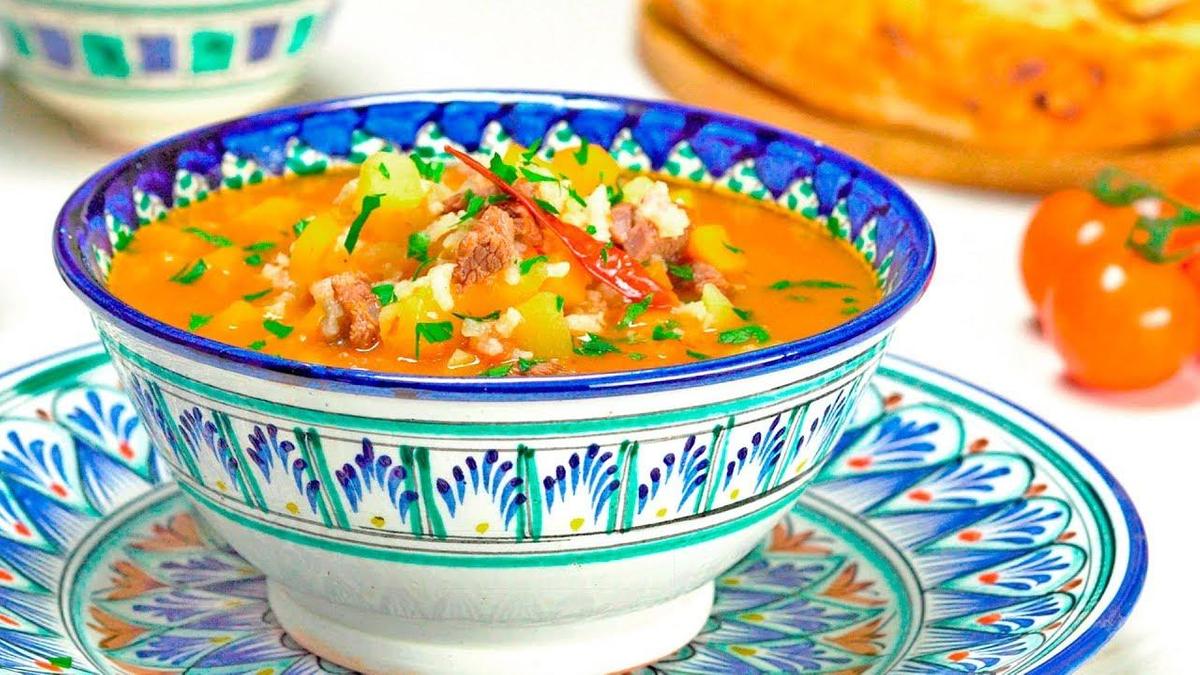
Mastava is a liquid food that is popular in eastern cuisines and is a healthy dish. Mastava is rich in vitamins and is loved by both young and old alike. In fact, Mastava is made by boiling rice in whey made from curd. Now it is made from carrots, onions, rice and other ingredients. According to the ingredients and the method of preparation, there are such types as boiled Mastava, fried, cherry, minced and sour Mastava. The main type of Mastava is prepared by boiling minced mutton. This one is our favorite and preferred recipe for cold winters. In folk medicine, this mastava is a good cure for high temperature, if eaten with freshly grounded pepper.
Lagman
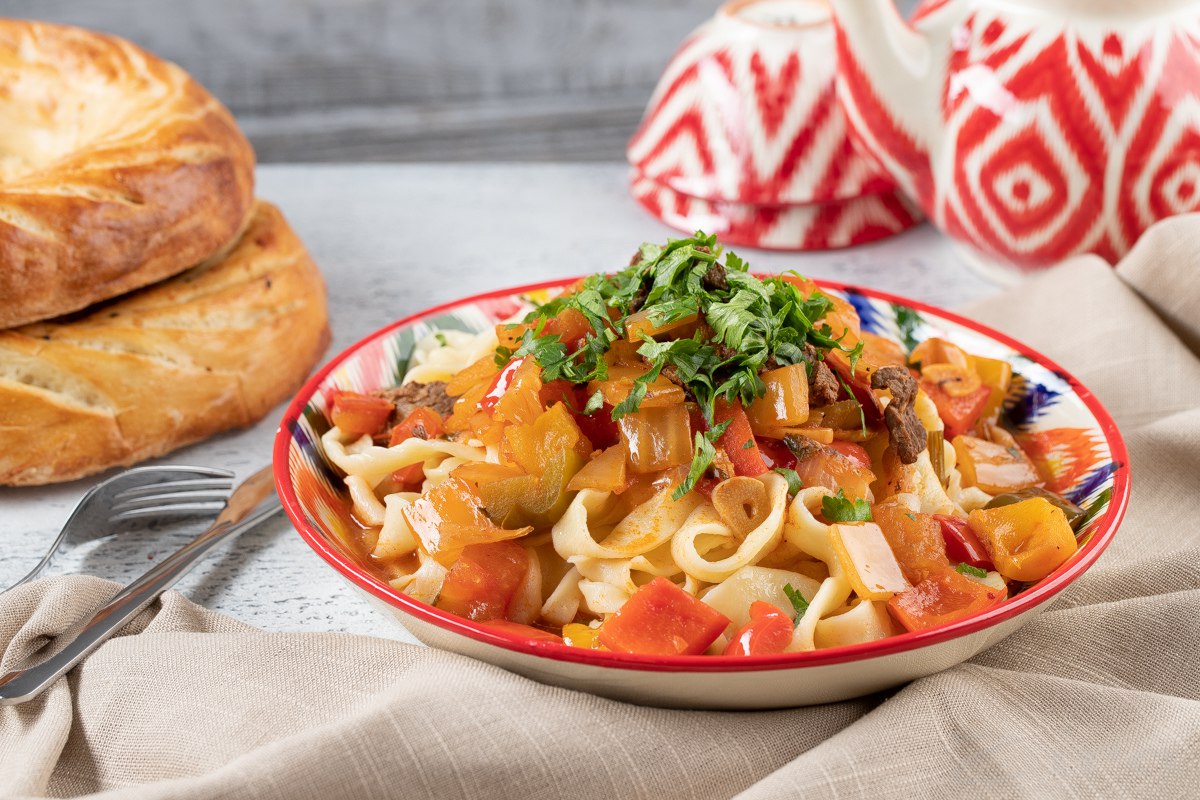
This lagman is typical of real Uzbek cuisine and originated in very ancient times. It is very rich and delicious, and it is a dish that is worth putting on the table of guests. It can be prepared in all four seasons of the year. This type of lagmon is mostly prepared in the Fergana Valley. The preparation of cut lagmon is as follows: the dough is made as if it were made for dumplings, let it rest, and then spread it to 2-3 mm with the help of a rolling pin. Cut long strips of 4-5 mm width after laying the dough, and wrap them in a roll so that they donʻt stick together. The cut ugar is boiled in boiling salted water, and when it floats to the surface, it is floated in a pan, rinsed 2-3 times in cold water, and then drained. Cabbage is prepared as follows: cut onion into rings, meat into almond-sized chunks, tomatoes into slices, medium potatoes (1.5 X 1.5 X 1.5 cm), radish into small ( 0.5 X 0.5 X 0.5 cm) is cut into cubes, cabbage, sweet garlic and garlic are finely chopped. In the cauldron, oil is added to the onion, meat is added before it is browned, and when it begins to sizzle, add tomatoes and garlic until the tomatoes are crushed and sizzled. Tomatoes can be used instead of tomatoes in winter. Then add radish, sweet garlic and cabbage and fry until half-cooked, add a little water and simmer on low heat until all the ingredients are completely soft. When the water evaporates, each ingredient is boiled until completely soft. Add a little hot water if it becomes too watery. Adjust the salt and pepper. It is necessary to pay attention to the fact that the cabbage is not too liquid or too thick, but average. When ready to serve, cook the noodles in boiling water and heat them, put them on a plate in one layer, put cabbage on the second layer, put the third layer of noodles on top of it, and put the cabbage on the fourth layer, sprinkle with chopped scallions.
Nokhatshorak
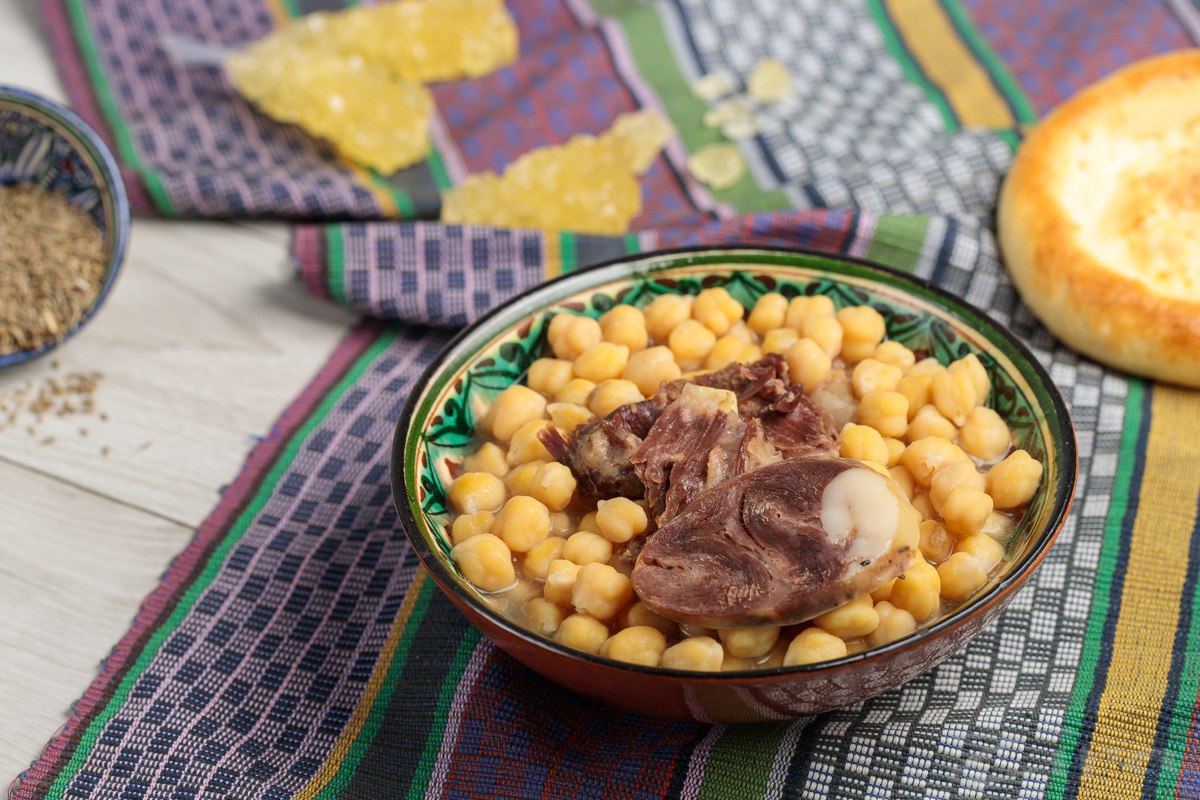
Nokhatshorak is one of the favorite dishes of many people, and it is widely prepared mainly in Samarkand region. Peas in khatshorak are frozen overnight and boiled throughout the day. You will see that the lamb and chickpeas in it are cooked in the oven and melt in your mouth.
Chuchvara
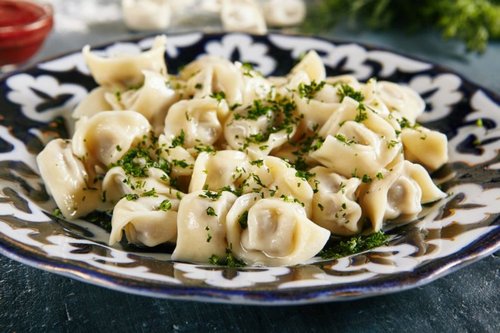
Chuchvara is a type of dumpling that is a popular dish in Uzbek cuisine. It is similar to other dumplings like Italian ravioli or Russian pelmeni. Chuchvara is made by filling small squares of dough with a mixture of minced meat, such as lamb or beef, along with onions and spices. The filled dumplings are then boiled in water until they are cooked through. They are often served with a flavorful broth or a sauce made from yogurt and garlic. Chuchvara is a comforting and hearty dish that is enjoyed by many people in Uzbekistan and other Central Asian countries.
Plov
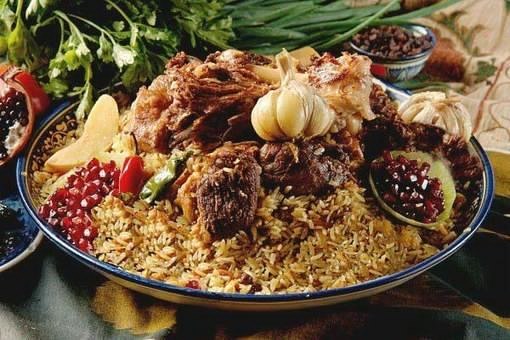
Plov is the main dish of Uzbek cuisine, and it holds a special place in the heart and taste of many people. It is a hearty, fragrant rice dish cooked with a mixture of meat, onions, carrots and spices. The dish is usually prepared in a large, heavy pot called a cauldron or deg, which allows for even cooking and the development of the desired crust known as a "cauldron". The main ingredients of Uzbek plov are rice, meat (often lamb, beef or chicken) and aromatic vegetables such as onions, carrots and garlic. The dish also contains spices such as cumin, coriander, and sometimes dried fruits and nuts, which provide a rich, complex flavor profile. Making Uzbek plov involves a unique method in which the rice and meat are layered in a pot, allowing the flavors to meld during the slow cooking process. The meal is often served with side dishes such as achichuk (fresh tomato and onion salad) and delicious yogurt. Uzbek plov comes in different regional variations, with cities like Samarkand, Tashkent, and Bukhara each adding their own flavor to the favorite dish. Uzbek pilaf is the pinnacle of culture, tradition and culinary art, from its rich history rooted on the Silk Road to its importance in social gatherings and celebrations.
cuisine
Minced kebab
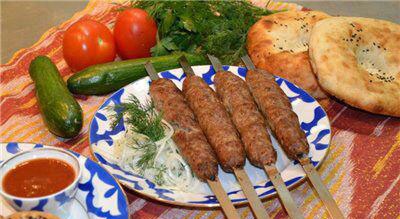
This traditional dish came to us under the influence of Azerbaijani cuisine, and its original name is "Lola kebab". "Lola" means "round pillow" in Turkish. Diet is in its fast digestion. It is prepared for holidays and weddings, and it is very popular when it is put on the table of a dear guest. It is necessary to prepare such a kebab from fresh and fatter meat. The meat is passed through a mincer. It will be even tastier if minced meat is mixed with mutton and beef. If you add finely sliced onions to the minced meat, it will increase its consistency. Egg white is added to increase the stickiness of the minced meat and prevent it from leaking when cooked. To improve the taste, add coriander seeds, pepper and salt and mix. Take a handful of the prepared minced meat, crumple it into six, and make it like a round pillow (cucumber) with a length of 8-10 cm. The surface is covered with breadcrumbs so that the juice does not flow. Pistachios are cooked on charcoal. Real Azerbaijani cooking is done in the heat of grape rust. Because the smoke of the grape rust gets into the minced meat, it will decorate it. Place two or four kebabs on a plate and garnish them with cumin-onion or fresh vegetables.
Bread
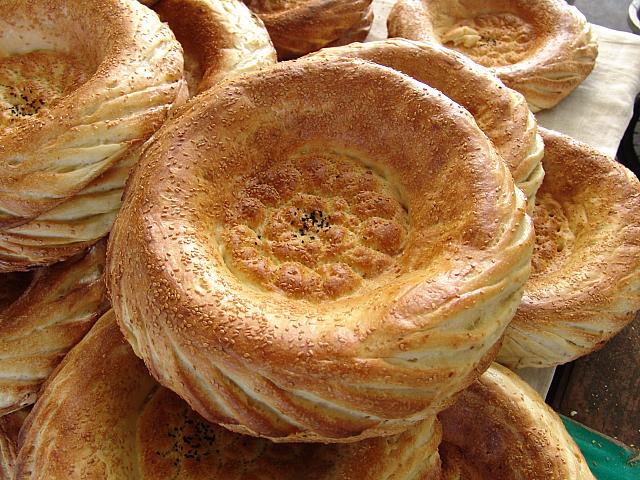
Bread is a food prepared by kneading, steaming or frying the dough. Bread consists of flour and water; soup, salt and yeast are often added. Sometimes sugar, spices, fruits (such as apples, nuts), vegetables (such as onions, meat) are added to the bread . Bread is prepared differently in different regions. Bread is a blessing that has been glorified since ancient times and considered sacred and precious in daily human consumption. It can be added to various dishes or eaten by itself. According to archeological data, it is assumed that the cooking and consumption of grains of spiky plants began 10-15 thousand years ago. During these times, fire was discovered, and it was possible to cook and eat grain. First, the ear was rolled in coals, then roasted in the ear, the ripe grain was massaged and eaten. Almost a chapter is dedicated to bread in "Avesta" and it is described as the most valuable product of agriculture. Pastries have a special place in Uzbek cuisine since ancient times. For example, only in Samarkand itself, bread products such as "Noni Asia", "Noni Polati", "Noni Zargoroni", "Noni Tafton", "Noni Obaki", "Noni Kuloboki", "Noni" zabonikaf", "noni comb", "noni khazzini" and other types are found [4]. Bread is eaten with various dishes or by itself in the daily consumption of a person. According to the method of baking (covering) bread: Gichcha bread Gizzy bread Sesame bread Fat cake Patir bread Kashkari bread Blue heron Shires such as Shirmay Patir
Dimlama
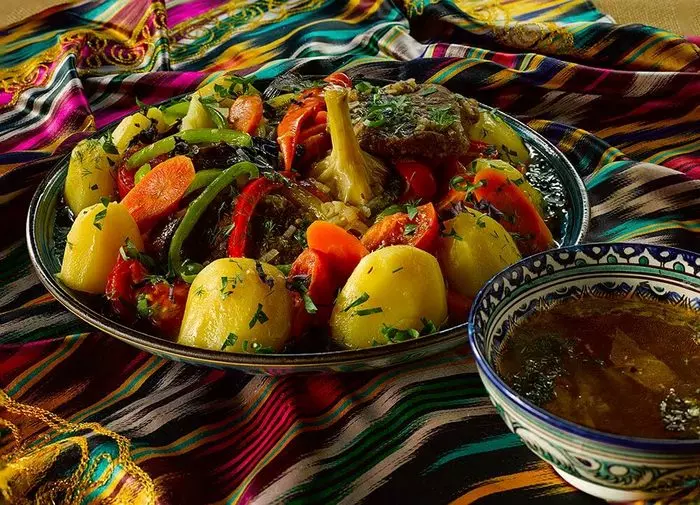
Dimlama is a dish prepared by dipping. It is cooked from meat or fish, various vegetables and some fruits. D. is palatable and easy to digest, because the useful substances (vitamins, mineral and sugar substances, aromatic and tasty extractive substances) of the food prepared by the steaming method are preserved. There are several types of D.: meat D., fish D., pumpkin D., quince D., vegetables D., etc. Meat D. - the meat and thighs are cut into pieces, the bones are also cut into 2-3 cm lengths, then mixed with finely chopped onions, salt and spices. First add fat, then bone, and then sliced meat to the heated pot. A bay leaf, ground pepper, and dill are placed on each layer, a little water is poured to create steam, and the lid is covered with gypsum and a towel is wrapped around it. 40 min. cooked during. The meat is served in plates and bowls. Pumpkin D. - pumpkin is peeled and seeded, cut into matchbox-sized pieces, then sprinkled with salt and fried a little in butter, pour more liquid cream over it and simmer for 30 minutes on low heat. cooked during.
Sikh kebab
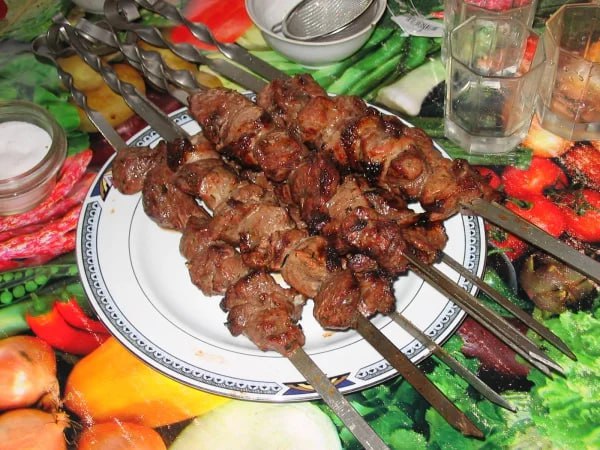
Six kebab is popularly called shashlik. "Shashlik" means "Sikh" in old Turkic languages, because "shish" means Sikh. "Kabob" means roasting. That is, this food, which is fried on a sikh, is taken from the most ancient dishes of mankind, especially primitive herdsmen. In those days, six was made of non-metal, of course. People cooked pieces of meat on sticks. It is impossible to keep pieces of meat lined up horizontally, because it will burn and fall off. For this purpose, wooden six (skewers) with meat were stuck vertically into the ground and cooked by exposing them to coals from the side where the wind blows. The custom of putting a piece of oil on the end of the kebab is from that time. This fat melted and seeped into the rows of meat below. Now, putting fat on the tip of the kabob is only a matter of construction and has no practical value, because the fat on the tip of the kabobs, which are placed horizontally on the fire, will flow out and catch fire without getting absorbed into the meat. "Shish" is six and its height is described in the book "Kyrgyz cuisine". For kebabs, thigh and thigh meats, buttock fat are food and always cut into the size of the first joint of the head bar. That is, it will be pieces of 15-16 grams. The fat is cut in the same size. Put it in a bowl and sprinkle with salt, cumin, coriander seeds and pepper. Finely chop the onion and mix well. That is, the meat is taken in handfuls and thrown back into the pan. It is mixed with mineral water, so that the water, onion juice, salt and spices are well absorbed into the meat. Only then will the kebab cook well. If there is freshly slaughtered sheep or beef, it can be cut without vinegar, sprinkled with salt and cooked in a six. Even if the meat itself is fresh, but it has become dry due to wind, it is vinegared. During pickling, spices, onion juice, mineral water and sour juices such as pomegranate, cherry, tomato are crushed. Kebab meat is cooked only on the basis of boiling water. This is the purpose of pickling, if the meat is not tender, the surface will quickly burn on the coals, and the heat will not penetrate inside the shell, as a result, the top will be burnt and the inside will be raw, and the good food will be wasted. Well-ground meat can be immediately transferred to the sieves and cooked, and unground meat can be left in a cool place for several hours to absorb the juices and spices. When we say vinegar, we should not come to the conclusion that vinegar is added to it, some people add vinegar to raw meat and take it away. It is a mistake to do this, because vinegar (especially white vinegar) will remove all the fat from the meat, it will be difficult to cook, and even if it is cooked, it will be tasteless. In fact, it is eaten by sprinkling vinegar on the face of the ready kebab. For this purpose, we recommend using only grape, apple and fig vinegars. Sliced meat is cut into four, six, or eight pieces depending on the length of the thigh, and traditionally the last piece is the thigh.
Bichak
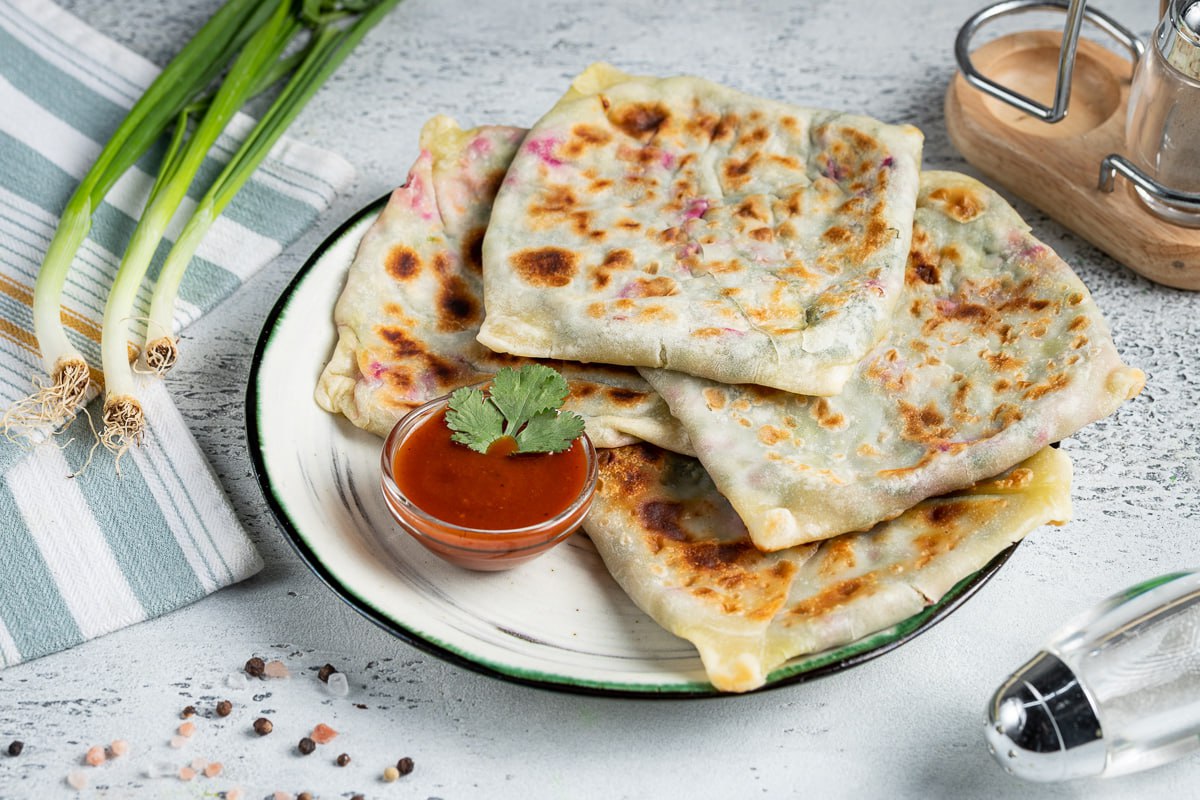
Bichak is a baked or fried pastry in various shapes (round, triangular, rectangular) and is popular in Central Asian cuisines, including Uzbek cuisine, Tajik cuisine, Afghan cuisine, and Middle Eastern cuisine. In Moroccan cuisine. Often served during tea or coffee hours. Bichak can be filled with pumpkin, vegetables and jam for a sweet taste, or meat and cheese for a tasty addition to lunch.
Steamed dumplings-Manti
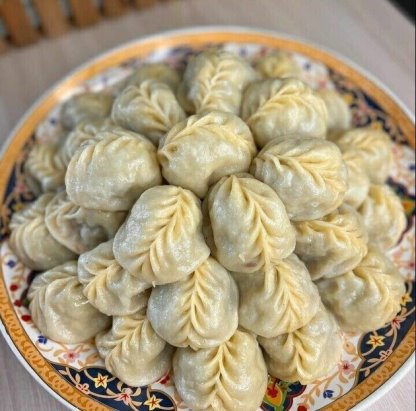
Manti is a classic dish popular in the cuisines of Turkic and Muslim nations: the Caucasus, Turkey, Mongolia, Uzbekistan, and even China and Korea. In Russia and the post-Soviet region, manti is a very popular dish from the Central Asian republics of the former Soviet Union. The origin of the dish is still unknown. Many facts, including etymological evidence, indicate that this recipe originated in China and spread further along the Great Silk Road. Traditionally, manti is cooked in a special device called a manti cooker, manti cooker, manti pot or manti-kaskan. A manti pot is usually multi-layered. Water is poured into the lower chamber and the upper compartments have steam vents (lappays) that allow cooking. In a manti pot, you can cook 40 or more manti at a time. Depending on the ingredients, there are types of manti, such as kok manti, meat manti, pumpkin manti, mint manti and potato manti.
Samsa
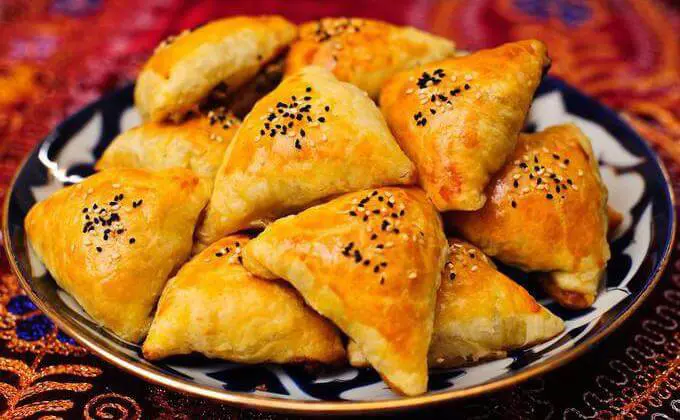
In Uzbek cuisine, somsa is mainly prepared in a round shape, closed in the oven. Nowadays, they are also cooked in triangular and square shapes in gas ovens. To prepare somsa, dough is made from wheat flour and jilt is made. Somsa is often served with vinegar and tomato sauce, and Jizzakh somsa is sprinkled with vegetable oil. Just as hot dogs are sold on the streets of European countries, somsa is closed in portable ovens and sold on the streets and markets in the residential areas of countries such as Uzbekistan, Kazakhstan, Tatarstan, and Kyrgyzstan. For some types of somsa, where meat is used, the dough is made with raised and sometimes unraised dough, sprinkled with namakob on the heated oven (in some cases, the oven is greased) before being put in the oven. Depending on the ingredients of the somsa, there are different types of somsa in the farm, such as somsa with meat, leafy somsa, blue somsa, pumpkin somsa, mint somsa, and potato somsa.
Desert
Shirguruch
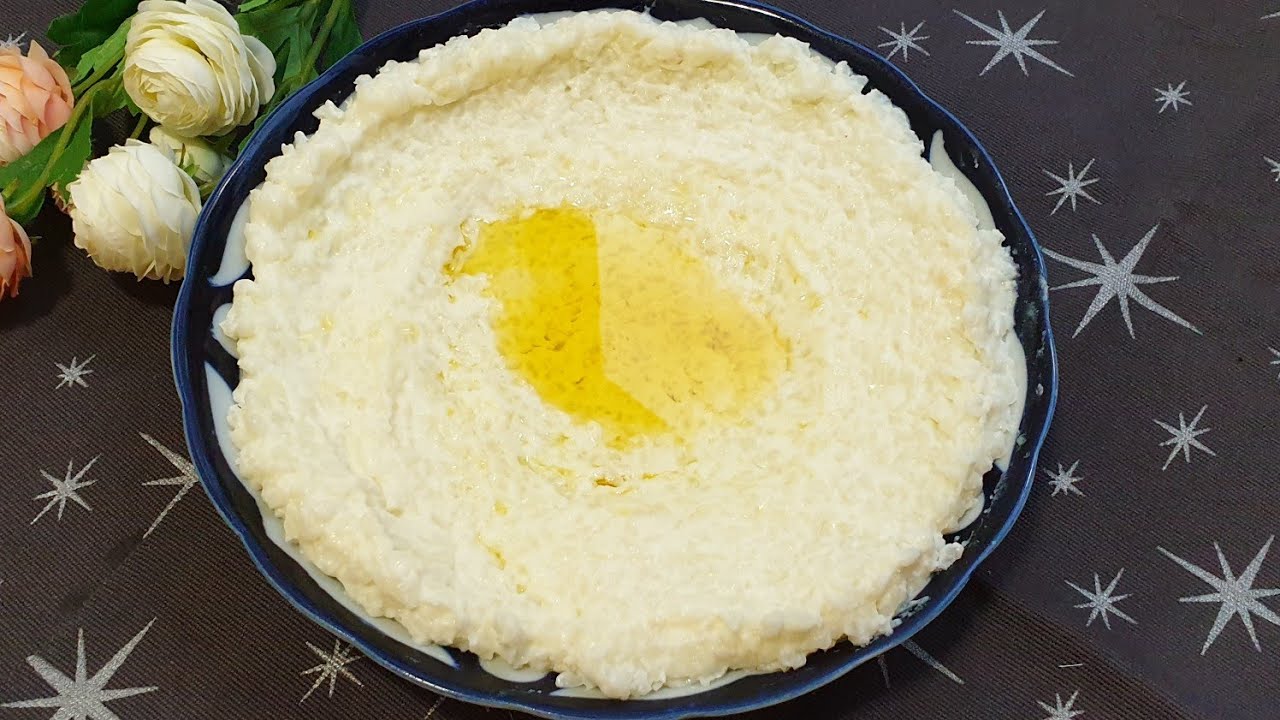
Shirguruch is a thick dish made from milk and rice. Rice is cleaned and washed 3-4 times. When the water in the pot boils, add rice and a little salt. When the rice is half cooked, milk is poured. The milk should be poured into the rice 3-4 times depending on its absorption, and the food should be stirred continuously. When the rice is crushed and the milk is completely absorbed, the food is ready. Ready shirgurin is put on a plate, put on the surface of butter (sometimes sugar) and put on the table.
Gilmindi
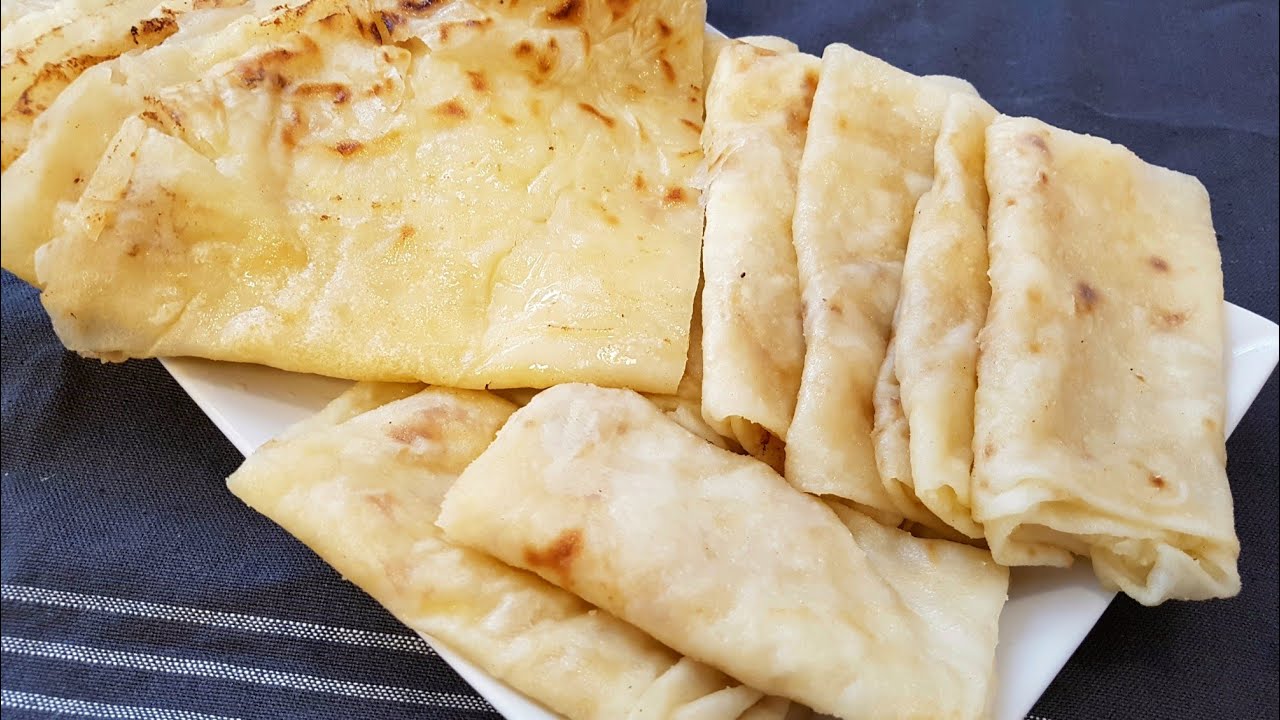
Uzbek national dish made from slurry, butter and thin dough. Water, milk, eggs and salt are added to form a stiff dough. It is removed to a warm place for 15 minutes. The finished dough is divided into 30 gram balls and spread thinly. It is cooked one by one in a pan in a little oil. Flour is added to water for slurry Mix until no lumps remain. Boil milk in another vessel. Sugar is added, then flour mixture is added and stirred until thick. It is stopped when it becomes a slurry. Melt the butter in a pan. Slurry is put in half of the stick and half is closed. A little butter is poured into the plates. A spoonful of butter is poured into each gilmindi. It tastes good both hot and cold.
Pancake
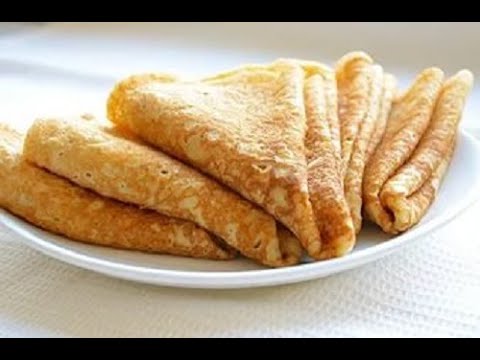
pancake (or hotcake, griddlecake, or flapjack) is a flat cake, often thin and round, prepared from a starch-based batter that may contain eggs, milk and butter and cooked on a hot surface such as a griddle or frying pan, often frying with oil or butter. It is a type of batter bread. Archaeological evidence suggests that pancakes were probably eaten in prehistoric societies. The pancakeʻs shape and structure varies worldwide. In the United Kingdom, pancakes are often unleavened and resemble a crêpe.[2] In North America, a leavening agent is used (typically baking powder) creating a thick fluffy pancake. A crêpe is a thin Breton pancake of French origin cooked on one or both sides in a special pan or crepe maker to achieve a lacelike network of fine bubbles. A well-known variation originating from southeast Europe is a palačinke, a thin moist pancake fried on both sides and filled with jam, cream cheese, chocolate, or ground walnuts, but many other fillings—sweet or savoury—can also be used. Commercially prepared pancake mixes are available in some countries. Like waffles, commercially prepared frozen pancakes are available from companies like Eggo. When buttermilk is used in place of or in addition to milk, the pancake develops a tart flavor and becomes known as a buttermilk pancake, which is common in Scotland and the US. Buckwheat flour can be used in a pancake batter, making for a type of buckwheat pancake, a category that includes blini, kaletez, ploye, and memil-buchimgae. When potato is used as a major portion of the batter, the result is a potato pancake. Pancakes may beserved at any time of the d 1,ay or year with a variety of toppings or fillings, but they have dev eloped associations with particular times and toppings in different regions. In North America, they are typically considered a breakfast food and serve a similar function to waffles.
Halwa
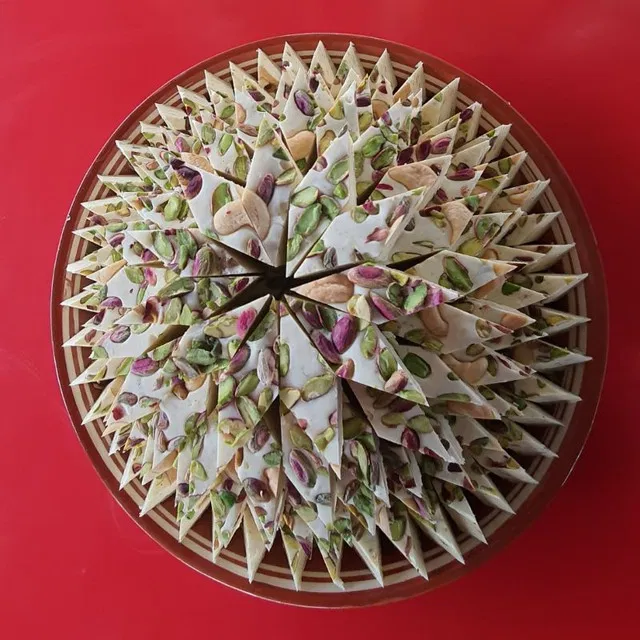
Holwa (Arabic: حالاواة) is a type of dessert. Oil, sesame, walnut kernel, almond kernel, flour and other ingredients are added to the sugar or honey-boiled stew. Cocoa and cocoa powder, raisins, sugars, vanillin, citric acid and others are added to Holva to improve its taste. According to the ingredients, there are varieties of Holva such as Cucumber Holva, Corn Holva, Walnut Holva, Sunflower Holva, Sesame Holva, Peanut Holva, Pashmak Holva. Each type of holva is called vanillin, chocolate, vitaminized and other names, depending on the amount of auxiliary substances added. In the countries of the East, including Central Asia, the profession of carpentry has existed since ancient times. In large shakars, holva-paz are specialized in preparing various holvas using grapes or mulberry molasses, flour, oil, sesame, apricots, etc., and then sugar and sugar.
Chak-chak
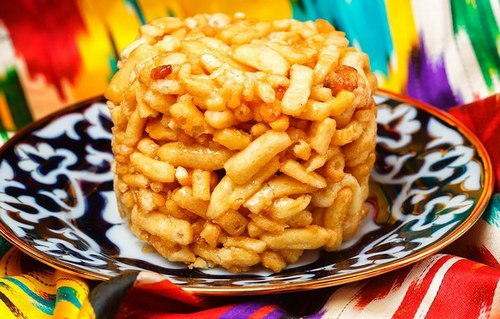
Chak chak is a traditional sweet dessert from Uzbek cuisine. It is made by frying small pieces of dough and then soaking them in hot honey or sugar syrup. The pieces of dough stick together to form a crunchy, sweet treat. Chak chak is often flavored with spices like cardamom or cinnamon, and sometimes nuts like almonds or walnuts are added for extra crunch. It is usually served during special occasions or celebrations, and it is a popular treat in Uzbekistan and other Central Asian countries.
Conveniences
- Wi-Fi available
- Public transport
- Street parking
- Family friendly
- Air conditioning
- Heating system
- Popular places
- Garden
- You can bring alcohol, cocktail and soda
- Tandoor
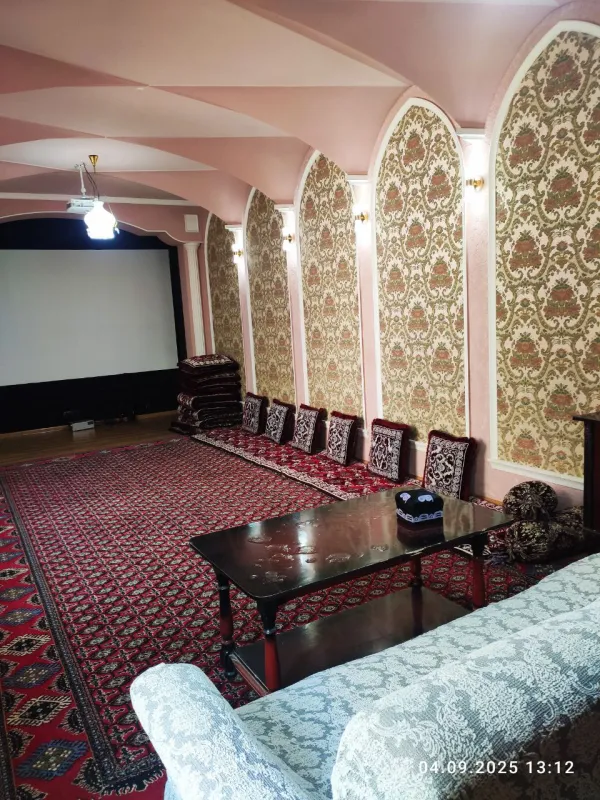
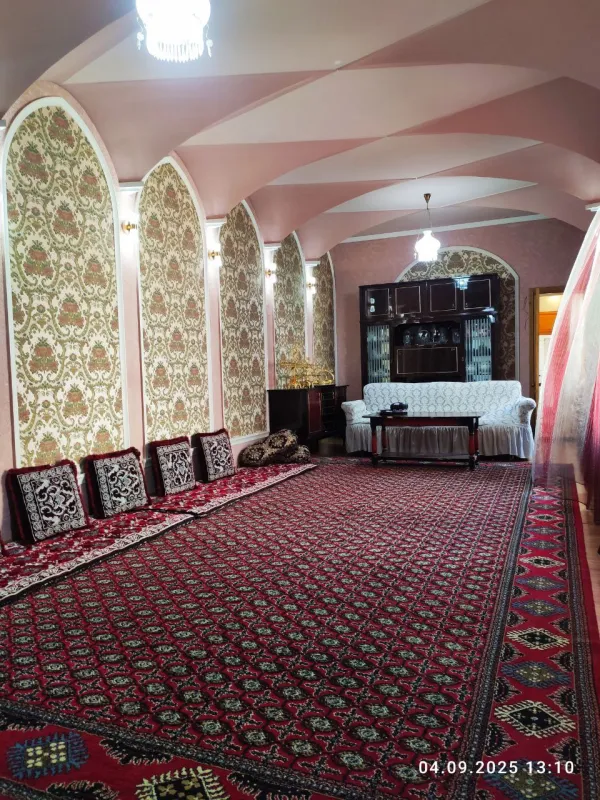
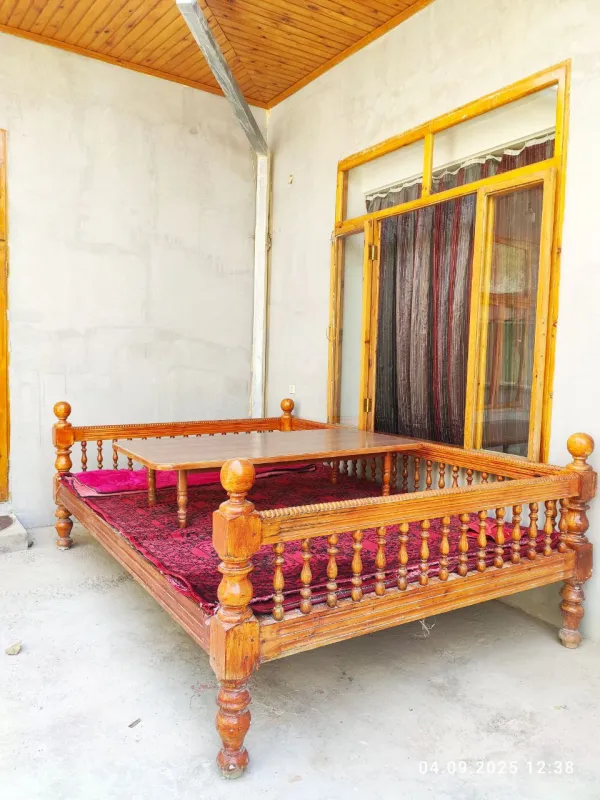
- Tapchan
Location
Reviews (0)
Add Your Review
The owner of the apartment

Khalbaev Alisher Samarkand. Amir Temur 65 A
- Samarkand, Amudarya district
- +998902276607
- sher6607@rambler.ru
- city center, 2 km from the central park, 3 km from Registan square, landmark Zarmed clinic
1756980578.webp)
1756980610.webp)
1756980630.webp)
1756980667.webp)
1756980709.webp)
1756980732.webp)
1756980809.webp)
1756980822.webp)
1756980844.webp)

EATEN.UZ
Welcome to Eaten.uz – Where Tradition Meets Taste! Eat, enjoy, and enrich your life with Eaten.uz!